The single most-cited food story of 2026 is not a specific additive scandal. It's the accumulating weight of evidence that ultra-processed food, considered as a category, is doing measurable damage to cardiovascular and mental health across large adult populations.
A May 2026 European Heart Journal report, produced by a working group of the European Society of Cardiology, documented that people in the highest quintile of ultra-processed food (UPF) intake had approximately 50% higher cardiovascular-related mortality, 48–53% higher risk of anxiety and common mental disorders, and 12% higher risk of type 2 diabetes compared to the lowest quintile. That sits alongside the Lancet's landmark 2025 UPF series, which reviewed more than 100 primary studies, and a BMJ Group aggregation documenting consistent evidence across more than 30 damaging health outcomes.
This is the kind of research pile that eventually moves clinical guidance. It is also easy to misread. Here's what the papers actually say, where the honest uncertainty still lives, and what the pattern implies for a weekly shop — without pretending the research is either more or less certain than it is.
What counts as ultra-processed
The definition matters, because "ultra-processed" is often confused with "processed" more generally. The most-used framework in the research literature is the NOVA classification developed by the University of São Paulo, which sorts foods into four groups by depth of industrial processing:
- Unprocessed or minimally processed: fresh produce, meat, milk, eggs, plain grains, dried herbs.
- Processed culinary ingredients: olive oil, butter, sugar, salt.
- Processed foods: tinned vegetables, cured cheese, fresh bread from a bakery, wine.
- Ultra-processed foods: industrial formulations of substances derived from foods and additives, typically containing sweeteners, emulsifiers, stabilisers, colourings, flavourings, protein isolates, modified starches, and hydrogenated oils.
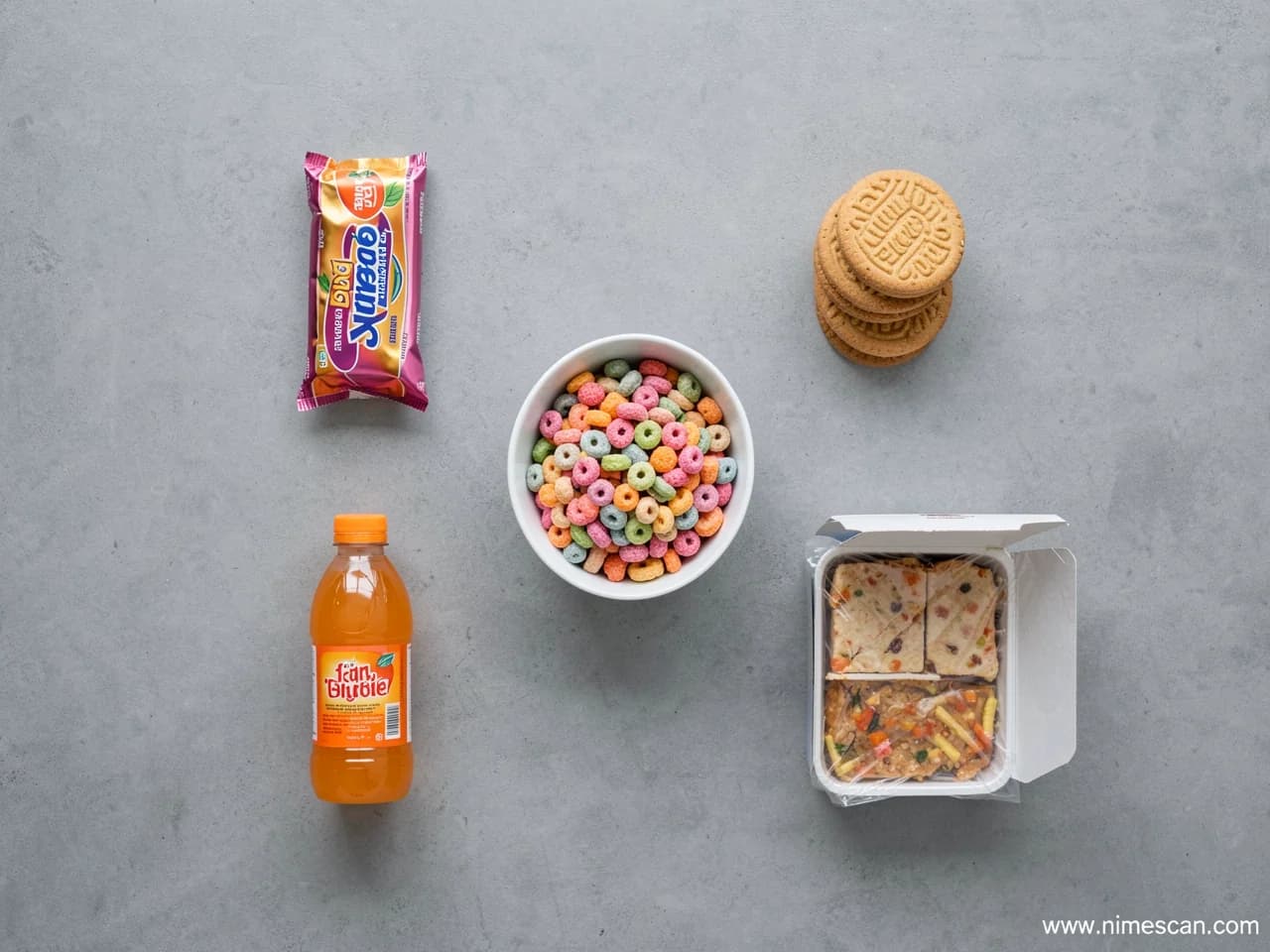
The everyday examples in NOVA group 4 are sugary breakfast cereals, packaged biscuits and snack bars, ready meals with long ingredient lists, sweetened dairy drinks, industrial bread with additives beyond flour-water-salt-yeast, soft drinks (both regular and low-calorie), reconstituted meat products, and most fast-food formulations. Whole yoghurt, home-baked bread, dried pasta, tinned tomatoes without additives, plain milk, roasted nuts and single-origin olive oils are not ultra-processed.
The distinction is deliberately not about nutrition alone. Two products can have similar calorie, sugar, and fat content and sit in different NOVA groups if one is a whole-food formulation and the other is a reconstruction of derived ingredients. That processing depth, not the macro breakdown, is what the research has increasingly identified as the load-bearing variable.
What the 2026 research actually found
Three parallel bodies of work have converged over the past 18 months.
The European Heart Journal report (May 2026). The working group of the European Society of Cardiology systematically reviewed prospective cohort evidence linking UPF intake to cardiovascular endpoints. Headline findings:
- Roughly 50% higher risk of cardiovascular-related mortality in the highest-intake quintile versus the lowest.
- 48–53% higher risk of anxiety and other common mental disorders.
- 12% higher risk of type 2 diabetes.
- Consistent signal across three large US prospective cohorts and a meta-analysis of prospective cohort studies.
The direction of association is consistent across cohorts in Europe, North America, and Latin America. The effect sizes are large enough that they're unlikely to be explained by residual confounding alone, though the working group is careful about the observational-versus-causal distinction.
The Lancet UPF series (2025–2026). The Lancet's landmark series synthesised over 100 primary studies covering UPF exposure and health outcomes. The authors' reply to critics published in early 2026 addressed the two most common counter-arguments (that the effect is confounded by socioeconomic status or by simple energy density) and concluded that the UPF signal persists after adjusting for both.
The BMJ aggregation. BMJ Group's overview documented consistent associations between higher UPF intake and more than 30 health endpoints, including cardiovascular disease, obesity, type 2 diabetes, colorectal cancer, mental disorders, and all-cause mortality. Not every association is equally strong, and the review is explicit about which associations are "convincing evidence" versus "suggestive evidence," but the overall pattern is consistent.
The three bodies of work do not, by themselves, prove that ultra-processing directly causes the observed harm. What they show is that people who eat more ultra-processed food have worse outcomes across a wide range of endpoints, in cohorts across three continents, over long follow-up periods, after adjusting for the obvious confounders. That is a strong pattern.
Why the harm looks like it's about the processing, not one ingredient
This is where public discourse and peer-reviewed research increasingly diverge, and it's worth being explicit about it.
The wellness internet has spent five years looking for a single ingredient villain — seed oils, aspartame, specific emulsifiers, high-fructose corn syrup, glyphosate residues, plastic packaging chemicals. Studies attempting to isolate any of these as the primary driver of the observed UPF harm have mostly failed. The Nime post on seed oils works through the linoleic acid case in detail; the emulsifiers post works through the DATEM / polysorbate case; the aspartame post works through the sweetener case. In each instance, the isolated-ingredient story is much weaker than the whole-category signal.
What the working group papers keep returning to is that the harm appears to sit in properties of the ultra-processing itself:
- Additive density. Multiple additives in combination have rarely been tested against each other in humans, and the EFSA 2026 mixture-effect guidance — mandatory from 20 July 2026 — is a formal acknowledgement of this gap.
- Energy density and hyperpalatability. UPF formulations are engineered to maximise intake — high energy density, low satiety per calorie, aggressive flavour and mouthfeel design. Controlled feeding studies find people eat more when the same nutrient content is delivered in ultra-processed form.
- Nutrient displacement. Every meal built around UPF is a meal where whole produce, whole grains, and minimally processed protein are not.
- Ultra-processed matrix effects. The physical structure of ultra-processed food changes gastric emptying, glucose response, and satiety signalling in ways whole-food alternatives with similar macros do not.
The single most robust action the research supports is reducing overall ultra-processed food intake, not chasing single-ingredient villains. That is a genuinely different framing from most wellness content.
Related: Seed oils inflammation research 2026 — a specific case study in how single-ingredient wellness narratives fail to reproduce the whole-category UPF signal.
Where the honest uncertainty still lives
Several things are not settled and it's worth being direct about them.
Whether the effect is fully causal. Observational cohorts, no matter how large or well-controlled, cannot rule out unmeasured confounding. The Lancet authors have explicitly addressed the socioeconomic-status and energy-density counter-arguments, but a controlled long-term feeding trial randomising 10,000 people to UPF-heavy versus UPF-light diets for a decade is not going to happen. Public health is going to have to move on the observational signal, as it has for tobacco, alcohol, and dietary patterns generally.
Whether the effect size holds at moderate intake. The published risk ratios are largest at the highest quintile of intake. The effect at the middle quintile is smaller but still present. Whether there is a threshold below which UPF is essentially neutral, or whether the harm is linear all the way down, is not yet resolved. Practical implication: the safe move is to reduce, not to eliminate.
Whether specific UPF sub-categories carry disproportionate weight. Some sub-categories — sugary drinks, industrial breads, reconstituted meats — appear in the largest individual-food-group risk estimates. Others (some breakfast cereals, some yoghurts) have weaker associations. Whether this reflects genuine biological difference or just consumption pattern differences is an active research question.
Whether ultra-processed reformulation helps. Manufacturers are increasingly reformulating with fewer additives, plant-based ingredients, or higher fibre. Whether reformulated products carry lower cardiovascular risk than their unreformulated predecessors has not yet been directly tested. The default assumption should be that they might, but that they don't fully close the gap with whole-food alternatives.
What this implies for a weekly shop
The practical framing that fits the evidence.
- Reduce ultra-processed food intake, especially in the categories with the strongest signals: sugary drinks (both sugar-sweetened and artificially sweetened), reconstituted meat products, industrial breads with long ingredient lists, ready meals, sweetened dairy drinks, and packaged snack bars marketed as healthy.
- Increase whole-food volume in the same eating occasions: whole-food breakfast (whole yoghurt with fruit, oats, eggs on wholemeal), whole-grain-based lunches (soup, salad, whole-grain bread), single-ingredient snacks (nuts, fruit, plain dairy), whole-food dinners (fresh produce, minimally processed protein, olive oil).
- Don't confuse "clean" ultra-processed with whole food. A packaged bar with 'clean' ingredients — no artificial colours, no controversial sweeteners — is still ultra-processed if it's a formulated bar with protein isolates and modified starches. The wellness market has trained shoppers to look for the wrong signals.
- Watch out for single-ingredient framing. Both "seed oils are toxic" and "aspartame causes cancer" style claims fail to reproduce the whole-category UPF effect. If a single-ingredient story sounds too tidy, it probably is.
- Occasional UPF in an otherwise whole-food-dominant diet is a very different exposure profile from UPF-as-default. The pragmatic middle is not zero; it's proportionally low.
Related: What's actually in your protein bar? The 2026 reality — a case study of how the "clean" packaged category is still ultra-processed by any consistent classification.
How Nime treats ultra-processing
Ultra-processed level is one of the four risk measures in Nime's Harmfulness score, alongside additives, pesticide exposure, and microplastics. Nime's classification is inspired by the NOVA framework but implemented as a continuous spectrum rather than a discrete four-category label — two products that would both fall into NOVA group 4 can still score quite differently in Nime depending on additive density, ingredient engineering, and how far the formulation sits from whole-food form. A packaged bar with three additives and no artificial colours scores meaningfully lower on the ultra-processed dimension than a formulation with twelve additives, protein isolates, and modified starches — even though both are technically NOVA group 4.
The full methodology, including which components are measured directly from the ingredient list versus estimated from category-level research, is documented on the methodology page. The 2026 research pile is the kind of evidence that has moved the underlying weights inside the score — categories with the strongest observational signal (sugary drinks, reconstituted meats, industrial breads) get more weight than they did a year ago.
Frequently asked questions
What counts as an ultra-processed food?
Ultra-processed foods (UPF) are the fourth and highest processing category in the NOVA classification developed by the University of São Paulo. They're industrial formulations made mostly or entirely from substances derived from foods and additives (protein isolates, modified starches, sweeteners, emulsifiers, colourings, flavourings, stabilisers), with little or no unmodified whole food. The everyday examples are sugary breakfast cereals, packaged snack bars, biscuits, ready meals, packaged bread with additives, soft drinks (including diet), reconstituted meat products, and most flavoured dairy. Whole yoghurt, home-baked bread, dried pasta, tinned tomatoes, olive oil and plain milk are not ultra-processed. The distinction is not about nutrition alone — it's about the depth of industrial reformulation.
What did the 2026 research actually find?
The May 2026 European Heart Journal report, produced by a working group of the European Society of Cardiology, documented that people in the highest quintile of ultra-processed food intake had approximately 50% higher cardiovascular-related mortality, 48–53% higher risk of anxiety and other common mental disorders, and 12% higher risk of type 2 diabetes compared to the lowest quintile. This sits alongside the Lancet's 2025–2026 UPF series, which reviewed more than 100 primary studies, and a BMJ Group aggregation of consistent evidence across more than 30 damaging health outcomes. The findings are observational, not from randomised trials, but the effect sizes are large, the mechanisms are increasingly well understood, and the direction of association is consistent across cohorts on three continents.
Does this mean seed oils, aspartame, and emulsifiers are the problem?
No. The most defensible interpretation of the current evidence is that the harm sits in the ultra-processing itself — the density of additives, the energy density, the hyperpalatability engineering, the displacement of less-processed alternatives — rather than in any single ingredient. Studies attempting to isolate individual components (linoleic acid, aspartame, specific emulsifiers) have mostly failed to reproduce the whole-category effect. The single most robust action supported by the research is reducing overall UPF intake, not chasing single-ingredient villains. This is where wellness discourse and the peer-reviewed research increasingly diverge — the internet loves a single villain, the research keeps pointing to the pattern.
Is a moderate amount of ultra-processed food actually harmful, or only high intake?
The effect appears roughly linear across the intake distribution — the highest-intake quintile is the most-studied endpoint because the signal is largest there, but researchers have generally found that lower quintiles carry proportionally lower risk rather than a safe threshold followed by cliff-edge harm. That said, the practical implication most nutrition guidance has landed on is that ultra-processed food is not a hard "never" — it's a category to reduce toward the lower end of your consumption distribution, not eliminate. Occasional UPF in an otherwise whole-food-dominant diet is very different from a diet where UPF displaces most whole foods.
How does Nime factor in ultra-processing?
Ultra-processed level is one of the four risk measures in Nime's Harmfulness score, alongside additives, pesticide exposure, and microplastics. Nime's classification is inspired by the NOVA framework but implemented as a continuous spectrum rather than a discrete four-category label — two products that would both fall into NOVA group 4 can still score quite differently in Nime depending on additive density, ingredient engineering, and how far the formulation sits from whole-food form. The full methodology, including what's measured directly and what's estimated from ingredient-list signals, is documented on the methodology page.
Sources: ScienceDaily — Ultra-processed foods linked to higher risk of heart disease and early death, May 2026; The Lancet — Ultra-processed foods and human health: the main thesis and the evidence; The Lancet — Ultra-processed foods in research and policy: authors' reply, 2026; BMJ Group — Consistent evidence links ultra-processed food to over 30 damaging health outcomes; The Lancet Regional Health – Europe — Implications of food ultra-processing on cardiovascular risk considering plant origin foods: an analysis of the UK Biobank cohort; Ultra-processed foods and cardiovascular disease: analysis of three large US prospective cohorts and meta-analysis; Ultra-Processed Foods and Cardiovascular Health Risks — position review; FoodNavigator — Ultra-processed foods: 5 biggest implications from Lancet study; WHO — the NOVA food classification framework.