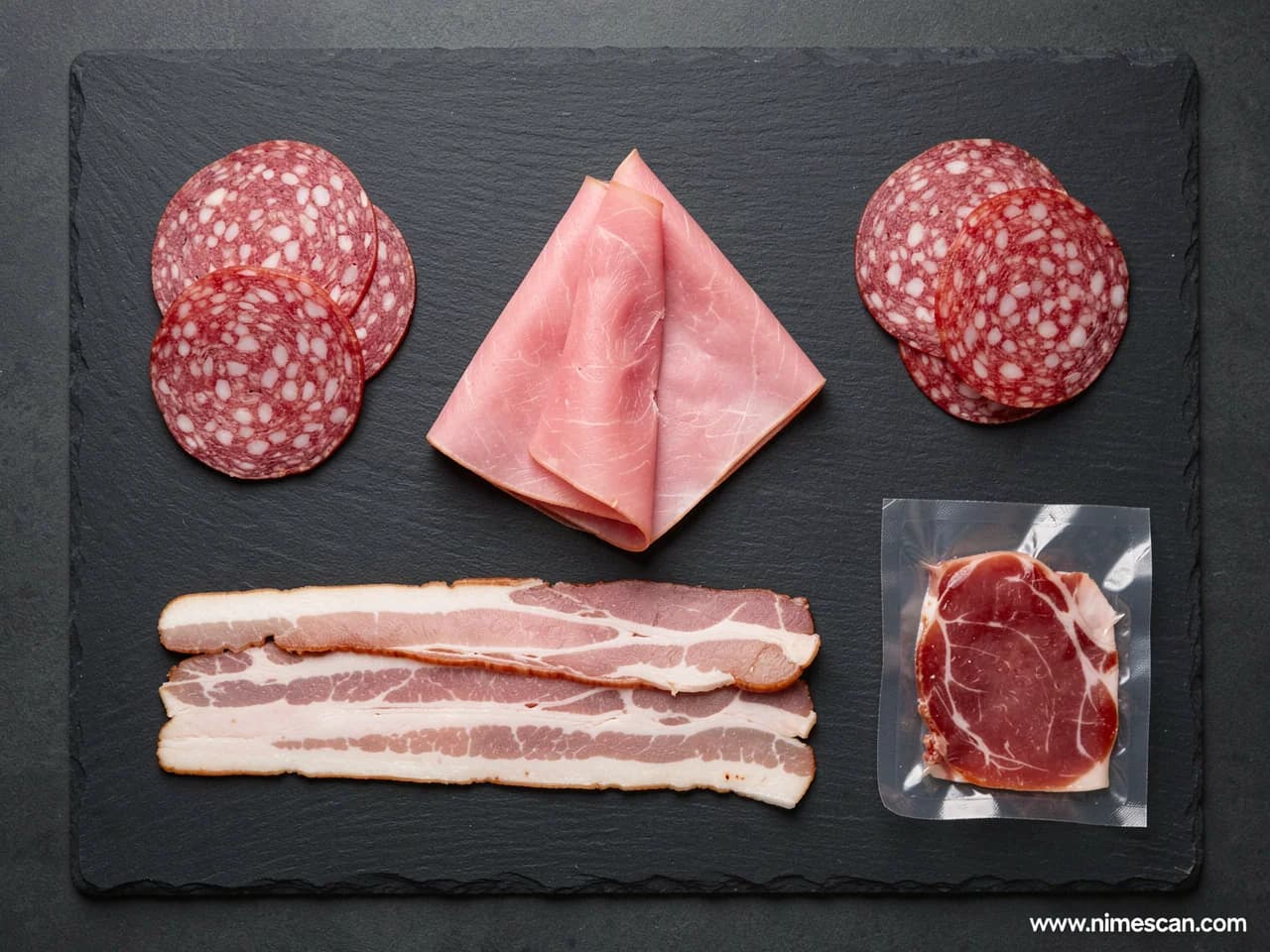
The single most under-discussed EU food regulation of the past 18 months is the one on nitrites and nitrates in processed meat. Commission Regulation (EU) 2023/2108 amended the additives regulation to cut permissible nitrite and nitrate levels in most cured meat products by roughly 40–50% from October 2025. Eight months in, the compliance situation across the industry is uneven, and a European scientist coalition is publicly arguing that the new limits are still too high.
The underlying research is not new. Processed meat has been an IARC Group 1 carcinogen since 2015 — the same category as tobacco smoke, in the sense of evidence certainty about a cancer link, though nowhere near the same scale of risk per unit of exposure. What is new is how much of that risk the EU regulator has finally decided to move on, and how much of the food-safety function of nitrite curing they've had to preserve while doing it.
Here's what the regulation actually did, why the cut is not as ambitious as some scientists wanted, where reformulation is going, and how to think about processed meat as a shopper in an environment where the underlying rules just shifted.
Why nitrites and nitrates are used in the first place
Cured meat processing has depended on nitrites and nitrates for over a century — long enough that most consumers have no idea the chemistry is there at all. The four functions:
- Antimicrobial protection, specifically against Clostridium botulinum. This is the load-bearing one. Botulinum toxin is one of the most acutely lethal substances known, and one of the reasons botulism is rare in modern Europe is that nitrite curing is standard practice for products that would otherwise be at risk (cured sausages, cooked-cured hams, some pâtés).
- The characteristic pink-red colour of cured meat, produced by the reaction between nitric oxide (from nitrite) and myoglobin in muscle tissue.
- The "cured" flavour, which arises from a set of reactions during the curing process that are hard to replicate any other way.
- Slowing lipid oxidation and rancidity in fat-heavy products.
The two additives are related but not identical. Nitrates (E251 sodium nitrate, E252 potassium nitrate) are the historical form — slow curing relies on native bacteria in the meat to convert nitrate to nitrite. Nitrites (E249 sodium nitrite, E250 potassium nitrite) are the modern shortcut, applied directly for faster processing. Both end up as nitrite in the product; the regulatory limits apply to both individually and jointly.
The food-safety function matters because it complicates the "just remove nitrites" call. Any substitute has to reproduce the anti-botulinum effect, or the risk moves from one category (chronic cancer risk from nitrosamines) to another (acute botulism risk). The regulator's balancing act is genuinely hard, and the 2025 cut reflects that.
What the 2025 EU regulation actually changed
Commission Regulation (EU) 2023/2108 amended Regulation (EC) No 1333/2008 on food additives, tightening both the amounts that can be added during processing and — crucially — introducing residual limits in the finished product rather than only limits on what's added at manufacture.
Headline numbers from October 2025:
- Maximum residual nitrite level for most cured meat: 80 mg/kg, down from 150 mg/kg.
- Maximum residual nitrate level for dry-cured products: 150 mg/kg.
- Application to cheeses and fish preparations brought in line with the meat framework.
- Specific carve-outs at slightly higher limits for a defined list of traditional slow-cured products (some jamones, dry-cured bacon variants, certain regional salamis) — recognising that residuals are harder to control at the tail of a natural curing process. These carve-outs are what allowed the regulation to pass without a full producer revolt from Spain, Italy and parts of France.
The industry has, per Food Manufacture's compliance overview, two years from October 2025 to bring products into line — most large processors have already reformulated, smaller producers are working through the reformulation stage, and traditional producers are relying on the carve-outs.
What the underlying research says
The 2015 WHO/IARC classification is the well-known headline: processed meat is Group 1, meaning there is sufficient evidence in humans for carcinogenicity, specifically for colorectal cancer, with associations also identified for stomach cancer. The WHO attributed approximately 34,000 global cancer deaths per year to diets high in processed meat.
The 2023 EFSA risk assessment (which drove the 2025 regulation) tightened the biological story. The concern is not that nitrite is directly carcinogenic at typical exposure levels. The concern is endogenous formation of N-nitroso compounds — nitrosamines and nitrosamides — when the nitrite from processed meat meets amines and amides in the stomach and gut. Some of those compounds are IARC Group 1 carcinogens (dimethylnitrosamine, N-nitrosodiethanolamine, N-nitrosodimethylamine). EFSA concluded that at pre-2025 exposure levels the residual health concern was present across all age groups, with children carrying disproportionate exposure per kilo body weight because of higher processed-meat consumption per kilo.
The 2025 cut reduces the input. Whether it reduces endogenous nitrosamine formation to the point that population cancer risk from processed meat is meaningfully lower is what the European scientist coalition has been arguing about. Their mid-2025 joint statement said the new limits are still too high to close the risk gap, and pushed for a further cut in the next regulatory round. The EU response has been that the 2025 numbers are what regulators judged achievable without compromising the botulinum-safety function; the next round of cuts depends on reformulation science.
Where reformulation is going
The industry response has been more interesting than the debate. Two threads:
Nitrate-reduced curing with active fermentation. Slow-curing traditional products (dry-cured hams, some salamis) are being reformulated to work with lower nitrate input by relying more heavily on selected starter cultures that produce the antimicrobial effect through fermentation acids rather than nitrite alone. Not new science, but the scale-up has moved fast since 2023.
Vegetable-nitrate curing sold as "clean-label." Products marketed as "no added nitrites" or "no synthetic nitrites" typically use celery powder, cherry juice powder, or other vegetable extracts that are naturally high in nitrates — which are then converted to nitrites in curing exactly as sodium nitrate would be. The chemistry is the same. The residual nitrite in the finished product is often similar to, and sometimes higher than, conventional cured meat. The independent testing consensus is that "clean-label" cured meats sit in the same nitrite residual range as conventional ones, sometimes higher. The label communicates a preference, not a chemically different product.
True nitrite-free processing. A small research literature is working on genuine substitutes — high-pressure processing, essential-oil-based antimicrobials, alternative starter cultures. The results are mixed. Sensory and shelf-life outcomes are usually worse than conventional cured meat, cost is higher, and the botulinum-safety margin is thinner. This is where the Sciltp position review sits — genuine reformulation is happening, but the substitution is harder than the "no added nitrites" marketing suggests.
Related: Heavy metals in protein powders: what the 2026 testing scandal actually shows — another case study in how "clean label" marketing sits alongside the actual contamination and additive profile of a category.
What this means for shoppers
The practical framing.
- Processed meat sits at the higher-risk end of the food-category distribution, both before and after the 2025 cut. The IARC Group 1 classification hasn't moved; the input to the biological mechanism has been reduced but not eliminated. A processed-meat-light diet is defensible; a processed-meat-heavy diet remains high-risk.
- Watch out for "no added nitrites" labels. The chemistry is often similar to conventional cured meat, and the residual nitrite in the finished product can be similar or higher. If you're avoiding nitrites for health reasons, the label is not the reliable signal — the residual test is, and consumers can't see that.
- Traditional slow-cured products (jamón ibérico, high-end dry-cured salami, artisanal dry-cured bacon) have specific EU carve-outs at higher residual limits, but their consumption is typically low-volume, thin-slice, occasional. That's a different exposure profile from daily supermarket cold cuts, and the risk arithmetic is different.
- The reformulated post-2025 products are genuinely lower on the input side. If you eat cured meat regularly, the products manufactured after October 2025 are meaningfully lower in nitrite than the pre-2025 equivalents. Product turnover means most shelves have converted by mid-2026; artisanal producers and small independent brands may still be in transition.
- The reduction in processed meat intake is a stronger population-health lever than substitution. Most nutrition guidance has landed on "reduce, don't zero" — the recommended maximum for processed meat consumption in most member-state national guidance is well below current EU average intake.
Related: Ultra-processed food and the heart: what the May 2026 European Heart Journal report actually says — the broader research context for why processed meat is one of the highest-risk sub-categories within the ultra-processed food group.
How Nime treats processed meat
Processed meat sits at the higher-Harmfulness end of Nime's scoring for two independent reasons:
- Nitrite exposure and associated endogenous nitrosamine formation is captured in the additives dimension, calibrated against EFSA's 2023 opinion and the 2025 EU limits. Products with high residual nitrite (measurable from ingredient list, additive declaration and category) score higher on that dimension.
- The WHO/IARC Group 1 classification of processed meat as a whole is captured in the ultra-processed level dimension for reconstituted products. Ham slices reconstituted from mechanically recovered protein, formed and dyed, sit differently from a whole-muscle dry-cured ham even at the same nitrite input.
The score reflects the post-2025 regulatory environment, not the pre-2025 levels. Traditional slow-cured products with the specific EU carve-outs are treated as their own category — higher residual limits, but a slower endogenous formation curve and a different consumption pattern — so the score reflects the actual biology and typical use rather than a blanket assumption. The full methodology is documented on the methodology page.
Frequently asked questions
Why are nitrites and nitrates used in processed meat?
Nitrites (mainly E249 sodium nitrite and E250 potassium nitrite) and nitrates (E251 and E252) have been used in cured meat processing for well over a century. They serve four functions: preventing growth of Clostridium botulinum (the toxin behind botulism), giving cured meats their characteristic pink-red colour, contributing to the cured flavour, and slowing lipid oxidation. The food-safety function is genuinely load-bearing — botulism is rare in modern Europe, largely because nitrite curing is standard practice. This is why blanket "nitrite-free" calls are more complicated than they sound: any substitute has to reproduce the anti-botulinum effect as well as the visual and flavour effects.
What did the 2025 EU regulation actually change?
Commission Regulation (EU) 2023/2108 amended Regulation (EC) No 1333/2008 on food additives, cutting the permissible use levels for nitrites and nitrates in most meat products by roughly 40-50% and introducing residual limits for the finished product (not just the amount added). From October 2025 the maximum residual nitrite level for most cured meat is 80 mg/kg, down from 150 mg/kg. Nitrate residuals are limited to 150 mg/kg for dry-cured products. Traditional slow-cured products (some jamones, dry-cured bacon variants, certain regional salamis) have specific carve-outs at slightly higher limits, recognising that residuals are harder to control at the tail of a natural curing process.
Do these levels still leave a cancer risk?
That is the honest debate. EFSA's 2023 risk assessment concluded that current exposure levels — before the 2025 cut — presented a health concern for all age groups, driven mainly by endogenous formation of N-nitroso compounds (nitrosamines and nitrosamides) when nitrite from processed meat meets amines in the stomach. Some of those nitrosamines are IARC Group 1 carcinogens. The 2025 cut reduces the input; whether it reduces endogenous nitrosamine formation to the point that population cancer risk from processed meat is meaningfully lower is what the follow-up work is examining. A European scientist coalition published a joint statement in mid-2025 arguing that the new limits are still too high to close the risk gap, and lobbying for a further cut. The EU response is that the 2025 numbers are what regulators judged achievable without compromising the botulinum-safety function; the next round of cuts depends on reformulation science.
Are nitrite-free or "natural" cured meats actually safer?
Depends what you mean by natural. Products marketed as "no added nitrites" typically use celery powder, cherry juice powder or other vegetable extracts that are naturally high in nitrates, which are converted to nitrites in curing. The chemistry is the same, the residual nitrite content in the finished product is often similar to conventional cured meat, and the food-safety function is served the same way. So the label communicates a preference, but the actual exposure profile is closer to conventional cured meat than the marketing suggests. The consistent finding across independent testing is that "clean-label" cured meats sit in the same nitrite residual range as conventional ones, sometimes higher.
How does Nime treat processed meat?
Processed meat sits at the higher-Harmfulness end of Nime's scoring for two independent reasons: nitrite exposure and its associated endogenous nitrosamine formation is captured in the additives dimension, and the World Health Organization / IARC classification of processed meat as Group 1 (sufficient evidence in humans for colorectal cancer) is captured in the ultra-processed level dimension for reconstituted products. The scoring calibrates against the 2025 EU limits, the 2023 EFSA opinion, and the WHO/IARC position, so a product's Harmfulness score reflects the tighter regulatory environment rather than the pre-2025 levels. Traditional slow-cured products with the specific carve-outs are treated as their own category — higher residual limits, but a slower endogenous formation curve — so the score reflects the actual biology rather than a single blanket assumption.
Sources: Commission Regulation (EU) 2023/2108 — full text on EUR-Lex; Regulation (EC) No 1333/2008 on food additives; WHO — Carcinogenicity of the consumption of red meat and processed meat, IARC 2015; Food Ingredients First — European coalition calls for tougher laws on cancer-linked nitrites in processed meats; FoodTimes — Nitrites and nitrates, new EU limits on products of animal origin; Safefood — Is it time for the meat industry to go nitrate free?; Bio-Lallemand — Upcoming restrictions for nitrites and nitrates in the food industry; Food Manufacture — Compliance challenges with EU and UK nitrites/nitrates rules; Food Safety Magazine — Industry has two years to adapt to new EU nitrites/nitrates limits; Sciltp — Challenges and Prospects for Nitrite Substitution in Processed Meats.